PCMB
Explore a Science combination with Biology, alongside Physics, Chemistry and Mathematics.
 GITAMPU COLLEGEAdmission enquiry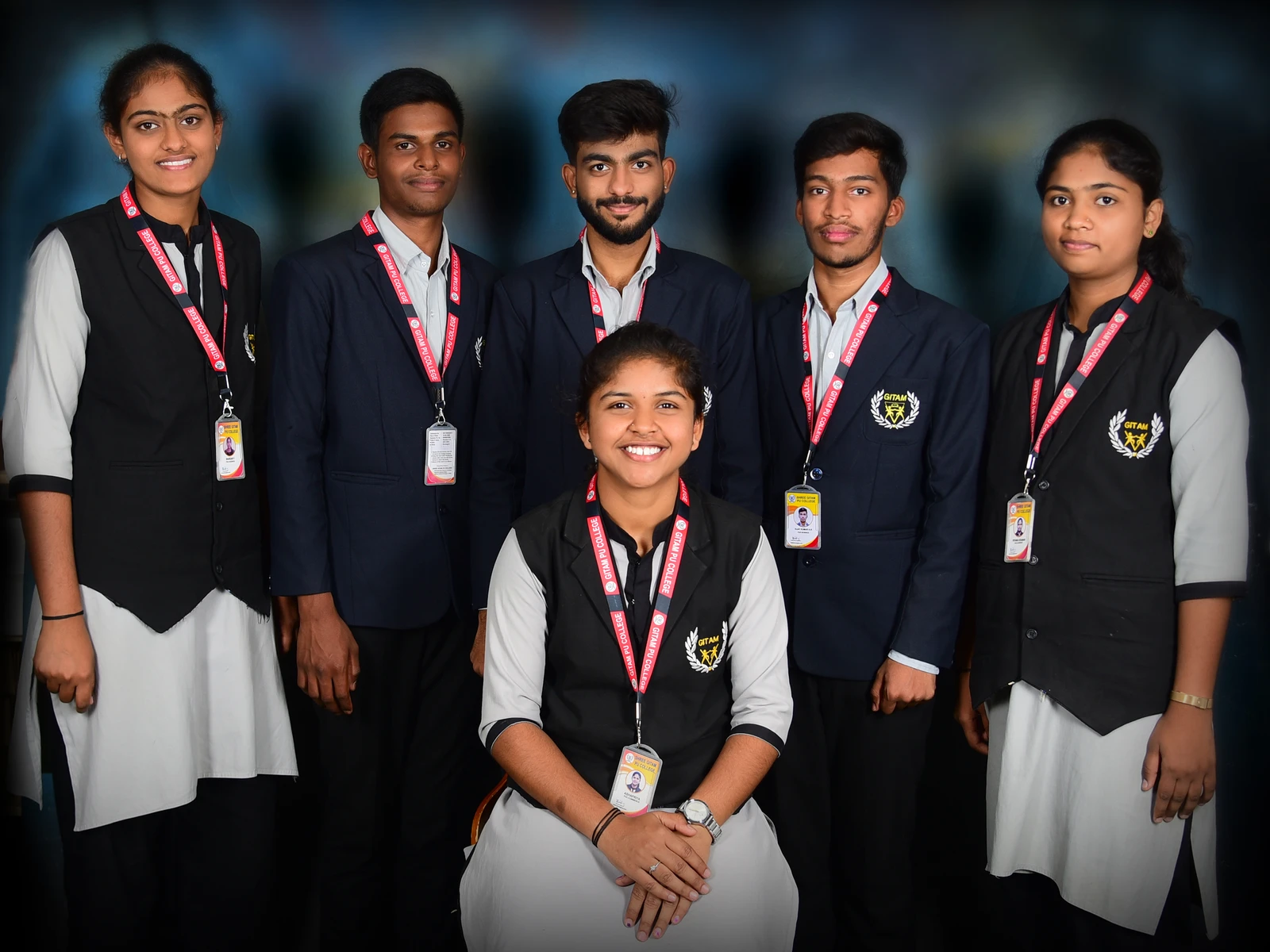
A new chapter. A world of possibility.
Discover your direction in Science and Commerce.
Build your next chapter at GITAM PU College, Davanagere.
Imagine what comes next
Every future begins with a strong foundation. Explore your pre-university choices at GITAM and take the next step towards your aspirations.
Discuss your pathwayExplore your possibilities
Start with the subjects that inspire you. Explore our Science and Commerce pathways and take the next step with guidance from our admissions team.
Explore a Science combination with Biology, alongside Physics, Chemistry and Mathematics.
Bring a curiosity for computing into your pre-university Science journey.
Discover a Science pathway for students interested in electronics and technology.
Explore the world of commerce and discuss available subject combinations with our team.
Course explorer
Select an interest to see a pathway to discuss with a counsellor.
Welcome to GITAM PU College
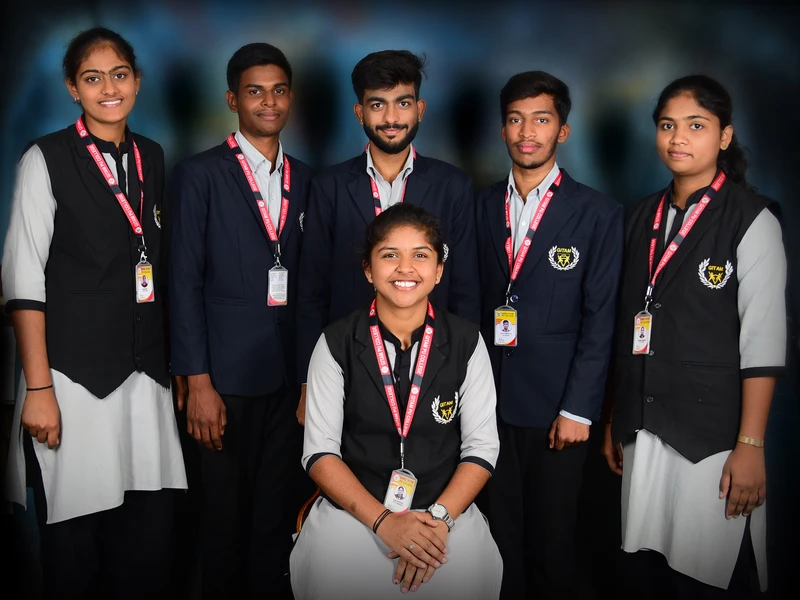
The pre-university years are a time to ask questions, discover your strengths and choose a direction. At GITAM PU College in Davanagere, that journey starts with Science and Commerce.
We believe in building subject understanding, confidence and a sense of purpose—helping students move towards the next stage of their education.
Get to know GITAMBuild knowledge through curiosity, consistency and academic focus.
Speak with our team about your interests and pre-university choices.
Your next step
Choosing a college is a conversation. Tell us what you’re looking for, and let’s explore your options together.
Start your enquiryCompare PCMB, PCMC, PCME and Commerce to find subjects that interest you.
Use the application form or call us to discuss courses, eligibility, fees and required documents.
Confirm the current admission process and next steps directly with the college.
Connected to your college
Students
Visit student resources and explore guidance for the next stage of your education.
Student cornerParents
Stay connected to your child’s college journey and find the parent resources.
Parent cornerBeyond the classroom
Explore college events, updates and moments from the GITAM community.
Events & activitiesGood questions. Clear next steps.
Our pre-university pathways include PCMB, PCMC, PCME and Commerce. The admissions team can explain the available subjects and help you compare options.
Open the admission enquiry form or call +91 96066 91888 or +91 96066 92888. Our team can guide you through the current process and documents required.
Please contact the college directly for current fees, eligibility, availability and dates. An enquiry does not confirm or guarantee admission.
Our published contact address is New Banashree Layout, Shamanur, Davanagere 577004, Karnataka. Call the college before your visit for directions and the appropriate admission office.
Yes. Parents and students can reach us on either admissions number or email shreegitam@gmail.com to discuss their questions.
We’re here to help
New Banashree Layout, Shamanur, Davanagere 577004

Schools & Pre-university college
Your ambition. Our commitment. Explore Science and Commerce pathways in Davanagere.
Stay Updated with Our Newsletter
Explore PCMB, PCMC, PCME and Commerce. Speak with our admissions team about the pathway that suits your interests and goals.
Start with an admission enquiry. Our team can guide you through course choices, required documents and the next steps.
Build subject understanding and confidence with faculty guidance throughout your pre-university journey.
B.Sc. Clinical Optometry is an undergraduate program designed to train students in the science of eye care, focusing on diagnosing and managing visual disorders, prescribing corrective lenses, and providing non-surgical treatments for various eye-related conditions. Optometrists play a key role in the primary eye care system, helping detect refractive errors, eye diseases, and contributing to overall eye health.
Definition: B.Sc. Clinical Optometry is a 3-year undergraduate degree program that trains students in the clinical practice of optometry. It covers various aspects of eye health, including vision assessment, refractive error correction, ocular diseases, and patient care.
Core Areas of Focus:
Optometry Basics: Anatomy and physiology of the eye.
Refractive Errors: Diagnosis and correction of myopia (nearsightedness), hyperopia (farsightedness), astigmatism, and presbyopia.
Optical Instruments and Equipment: Use of tools like retinoscopes, phoropters, and autorefractors for testing vision.
Ocular Diseases: Diagnosis of eye diseases like glaucoma, cataracts, conjunctivitis, etc.
Contact Lens Fitting: Prescribing and fitting soft and rigid contact lenses.
Low Vision Aids: Providing solutions for patients with vision impairment.
Optometric Procedures: Performing eye tests, screenings, and visual acuity assessments.
Duration: The B.Sc. in Clinical Optometry is typically a 3-year program (6 semesters).
Eligibility:
Completion of 12th grade (higher secondary) with Physics, Chemistry, and Biology (science stream).
A minimum aggregate score of 50% to 60% in the 12th exams (criteria may vary by institution).
Curriculum: The curriculum includes a combination of theory and practical training. Key subjects include:
Human Anatomy and Physiology of the eye.
Optometry and Vision Science.
Ocular Pharmacology.
Optical Instruments and Their Use.
Refractive Error Correction (spectacles, contact lenses).
Optometry Practices (patient care, eye tests, consultations).
Ocular Disease and Management.
Low Vision Aids and Rehabilitation.
Practice Management and Ethics.
Optometrists are responsible for assessing, diagnosing, and treating various eye and vision conditions. Their key responsibilities include:
Vision Testing: Conducting comprehensive eye exams to assess visual acuity, refractive errors, and eye health.
Refractive Error Correction: Prescribing eyeglasses or contact lenses to correct vision problems such as myopia, hyperopia, and astigmatism.
Diagnosis of Eye Diseases: Identifying early signs of eye diseases like glaucoma, cataracts, diabetic retinopathy, and age-related macular degeneration.
Contact Lens Fitting: Fitting and prescribing contact lenses, including specialty lenses for astigmatism or keratoconus.
Low Vision Aids: Helping patients with significant vision impairment by recommending devices to enhance their remaining vision, such as magnifiers or electronic aids.
Preventive Eye Care: Educating patients on maintaining eye health, providing recommendations on diet, eye safety, and lifestyle choices.
Referral for Specialized Care: Referring patients to ophthalmologists for advanced or surgical treatments when necessary.
Students of B.Sc. Clinical Optometry develop a range of clinical, technical, and interpersonal skills, including:
Clinical Skills: Conducting eye tests, vision screenings, and diagnosing eye conditions.
Technical Expertise: Mastering the use of various optical instruments like ophthalmoscopes, retinoscopes, and slit-lamp microscopes.
Patient Care: Developing empathy and communication skills to effectively interact with patients and understand their vision problems.
Optical Dispensing: Skills in selecting and fitting corrective eyewear, including eyeglasses and contact lenses.
Problem Solving: Identifying and providing solutions for patients with specific visual impairments.
Ocular Disease Knowledge: Understanding and identifying various eye conditions and managing them effectively.
After completing a B.Sc. in Clinical Optometry, graduates have multiple career options, including:
Optometrist: Working in hospitals, clinics, or private practice to provide eye care, vision testing, and corrective solutions.
Contact Lens Specialist: Specializing in the fitting and management of contact lenses for patients.
Ocular Disease Consultant: Assisting ophthalmologists in diagnosing and managing eye diseases.
Optical Retailer: Working in optical stores as a dispensing optician or optometry consultant.
Low Vision Specialist: Helping patients with severe visual impairments by recommending low vision aids.
Public Health Optometrist: Working in public health programs to promote eye health, prevent blindness, and conduct eye screenings.
Research and Academics: Pursuing higher studies (M.Sc. or PhD) and teaching or researching in the field of optometry and vision science.
Corporate/Industry: Working with optical product manufacturers or companies specializing in ophthalmic equipment.