PCMB
Explore a Science combination with Biology, alongside Physics, Chemistry and Mathematics.
 GITAMPU COLLEGEAdmission enquiry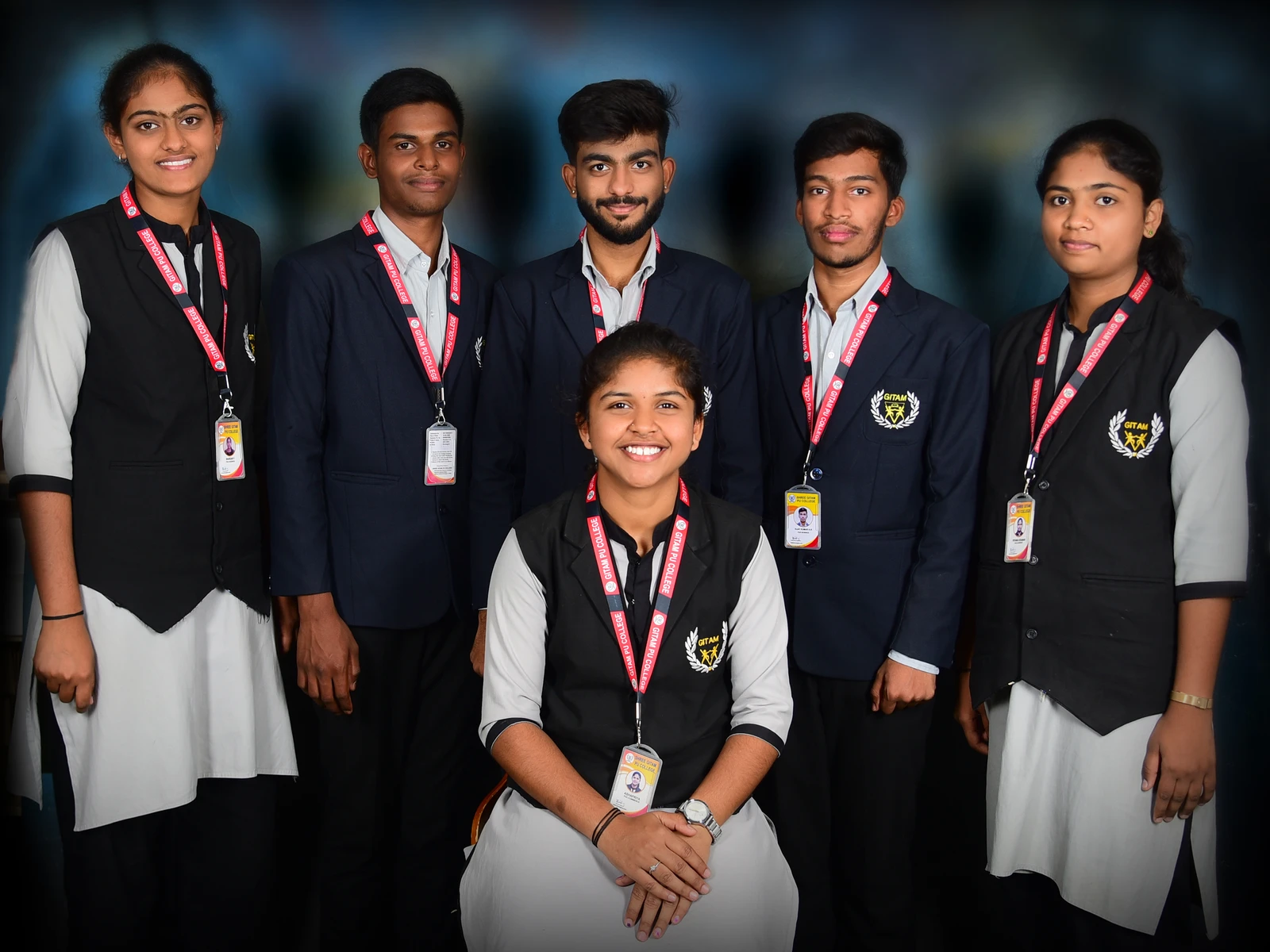
A new chapter. A world of possibility.
Discover your direction in Science and Commerce.
Build your next chapter at GITAM PU College, Davanagere.
Imagine what comes next
Every future begins with a strong foundation. Explore your pre-university choices at GITAM and take the next step towards your aspirations.
Discuss your pathwayExplore your possibilities
Start with the subjects that inspire you. Explore our Science and Commerce pathways and take the next step with guidance from our admissions team.
Explore a Science combination with Biology, alongside Physics, Chemistry and Mathematics.
Bring a curiosity for computing into your pre-university Science journey.
Discover a Science pathway for students interested in electronics and technology.
Explore the world of commerce and discuss available subject combinations with our team.
Course explorer
Select an interest to see a pathway to discuss with a counsellor.
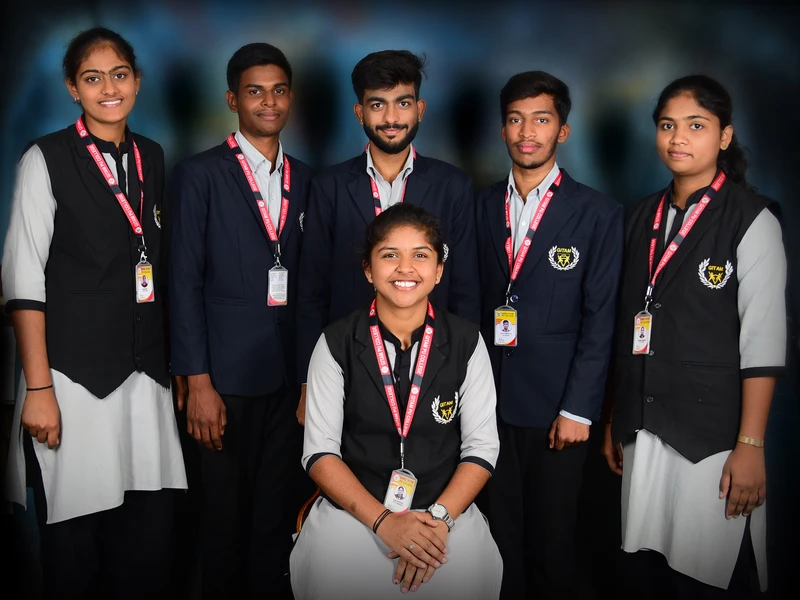
Welcome to GITAM PU College
The pre-university years are a time to ask questions, discover your strengths and choose a direction. At GITAM PU College in Davanagere, that journey starts with Science and Commerce.
We believe in building subject understanding, confidence and a sense of purpose—helping students move towards the next stage of their education.
Get to know GITAMBuild knowledge through curiosity, consistency and academic focus.
Speak with our team about your interests and pre-university choices.
Your next step
Choosing a college is a conversation. Tell us what you’re looking for, and let’s explore your options together.
Start your enquiryCompare PCMB, PCMC, PCME and Commerce to find subjects that interest you.
Use the application form or call us to discuss courses, eligibility, fees and required documents.
Confirm the current admission process and next steps directly with the college.
Connected to your college
Students
Visit student resources and explore guidance for the next stage of your education.
Student cornerParents
Stay connected to your child’s college journey and find the parent resources.
Parent cornerBeyond the classroom
Explore college events, updates and moments from the GITAM community.
Events & activitiesGood questions. Clear next steps.
Our pre-university pathways include PCMB, PCMC, PCME and Commerce. The admissions team can explain the available subjects and help you compare options.
Open the admission enquiry form or call +91 96066 91888 or +91 96066 92888. Our team can guide you through the current process and documents required.
Please contact the college directly for current fees, eligibility, availability and dates. An enquiry does not confirm or guarantee admission.
Our published contact address is New Banashree Layout, Shamanur, Davanagere 577004, Karnataka. Call the college before your visit for directions and the appropriate admission office.
Yes. Parents and students can reach us on either admissions number or email shreegitam@gmail.com to discuss their questions.
We’re here to help
New Banashree Layout, Shamanur, Davanagere 577004

Schools & Pre-university college
Your ambition. Our commitment. Explore Science and Commerce pathways in Davanagere.
Stay Updated with Our Newsletter
Explore PCMB, PCMC, PCME and Commerce. Speak with our admissions team about the pathway that suits your interests and goals.
Start with an admission enquiry. Our team can guide you through course choices, required documents and the next steps.
Build subject understanding and confidence with faculty guidance throughout your pre-university journey.
A Bachelor of Science (BSc) in Renal Dialysis Technology is an undergraduate degree program designed to train students to become Renal Dialysis Technologists. These professionals specialize in operating and maintaining the equipment used in dialysis treatment for patients with kidney failure. Dialysis is a life-saving treatment for individuals whose kidneys are no longer able to filter waste and excess fluids from the blood, a crucial function typically performed by healthy kidneys.
Renal Anatomy and Physiology: Understanding the structure and function of the kidneys, how they filter waste products from the blood, and the impact of kidney failure on overall health.
Dialysis Principles and Techniques:
Hemodialysis: Training in the process of filtering blood using a dialysis machine, including how to set up, monitor, and maintain the machine during treatment.
Peritoneal Dialysis: Learning about this alternative form of dialysis where the lining of the abdomen (peritoneum) is used to filter blood through a catheter.
Continuous Renal Replacement Therapy (CRRT): Knowledge of specialized dialysis methods for critically ill patients with kidney failure.
Dialysis Equipment and Maintenance:
Dialysis Machines: Detailed training on the operation of hemodialysis machines, including setup, calibration, troubleshooting, and ensuring proper functioning during treatments.
Water Treatment Systems: Understanding the importance of purified water in dialysis and how water treatment systems are used to produce clean water for dialysis procedures.
Patient Care:
Monitoring: Skills in monitoring patients during dialysis treatments, including vital signs, fluid balance, and signs of complications like infections or hypotension.
Patient Preparation: How to prepare patients for dialysis, including establishing access points (such as AV fistulas or dialysis catheters), ensuring patient comfort, and managing any pre-treatment anxiety.
Emergency Protocols: Understanding how to respond to complications like blood pressure changes, arrhythmias, or access issues during dialysis.
Dialysis Complications and Management:
Complication Prevention: Knowledge of complications like infections, blood clotting, electrolyte imbalances, and how to prevent or manage these issues.
Nutritional Support: Understanding the dietary needs of dialysis patients, such as restrictions on sodium, potassium, and phosphorus intake.
Ethics and Patient Interaction: Training in communication, confidentiality, and empathy, as dialysis patients often have chronic conditions and require long-term treatment.
Clinical Rotations: Practical, hands-on experience working with dialysis machines and patients under the supervision of healthcare professionals in hospitals or dialysis centers.
A BSc in Renal Dialysis Technology typically takes 3 to 4 years to complete, depending on the country and institution offering the program. Some programs may include internships or clinical rotations, which provide real-world experience.
Technical Proficiency: Expertise in operating and troubleshooting dialysis machines and related equipment.
Clinical Skills: Ability to prepare patients for dialysis, monitor their treatment, and manage complications.
Patient Care: Strong communication and interpersonal skills to support patients emotionally and educate them about their treatment.
Problem-Solving: Ability to quickly identify and address issues during dialysis, such as equipment malfunction or changes in a patient’s condition.
Graduates of a BSc in Renal Dialysis Technology can pursue careers in a variety of healthcare settings, including:
Hospitals: Working in nephrology departments or dialysis units, providing patient care during dialysis treatments.
Dialysis Centers: Specializing in outpatient dialysis care, managing the treatment process for patients with chronic kidney disease.
Home Dialysis Programs: Assisting in training patients who require home dialysis or providing support for patients receiving dialysis at home.
Medical Equipment Companies: Working with companies that manufacture or maintain dialysis machines and water treatment systems.
Healthcare Administration and Education: Teaching future dialysis technologists, or managing dialysis departments in hospitals or clinics.